Conditional volatility
GARCH-type models for financial time series, and variable selection inside them — the log-TGARCHX family and its estimation.
Assistant Professor of Mathematics and Statistics, ADA University · Head of the Statistics Unit, ICTA
I build statistical methods for data that misbehaves — volatile financial series, heavy-tailed distributions, national telecom measurements — and I teach the theory behind them.
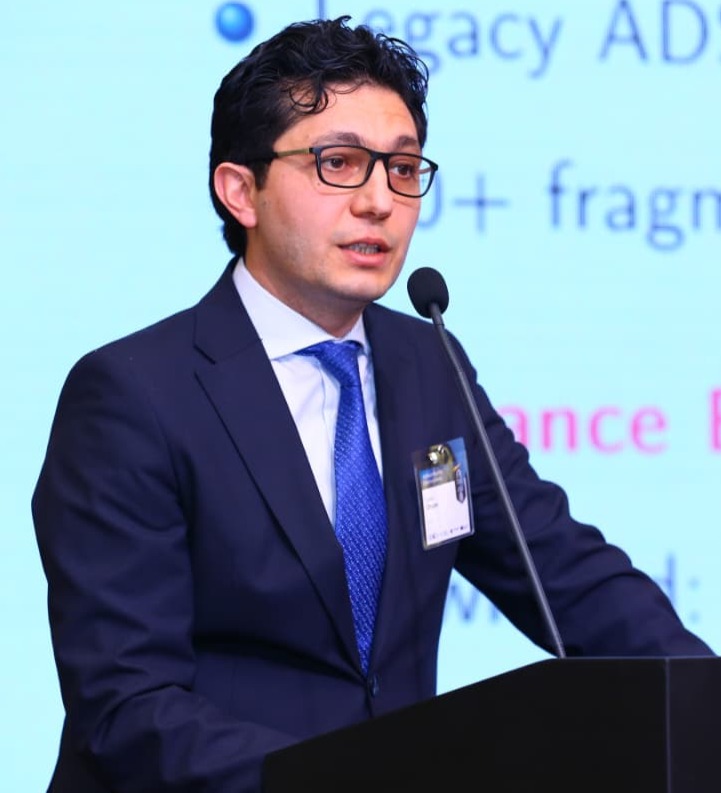
I am an Assistant Professor of Mathematics and Statistics at ADA University’s School of Business, and I head the Statistics Unit at Azerbaijan’s Information and Communication Technologies Agency. The two roles feed each other: the regulator supplies messy, high-frequency data at national scale, and the university supplies the time to work out what can honestly be inferred from it.
My doctorate, completed at the University of Southern Brittany in 2024, dealt with statistical methods for conditional volatility modelling in finance. Before that I read economics at CERGE-EI in Prague, and law in Berlin and Baku — a route into statistics that still shapes how I think about evidence and regulation.
I work mainly in Python and R, teach mathematical statistics with interactive lecture material, and write occasional poetry in Azerbaijani.
GARCH-type models for financial time series, and variable selection inside them — the log-TGARCHX family and its estimation.
Anti-modes, distributional gaps and the Fisher information profile: estimating where a density thins out, and testing whether the gap is real.
Glass barriers — thresholds in earnings distributions that are crossed far less often than a smooth model would predict.
Demand elasticity, measurement bias and quality-of-service statistics built from national Speedtest data.
9 poems in Azerbaijani — originals and answers to Nesimi, Rumi and Alovsat Salda.
Read the poemsPictures from Vannes, Prague and Baku — the places the work happened in.
See the photosHappy to talk about volatility modelling, telecom data, or supervising a thesis.